Entering the Dhamma - Retreat
“The stream of Dhamma, the stream of Dhamma, it is said.
What is the stream of Dhamma?
Sāriputta: ‘It is this Eight-Spoked Path of the Ariyas.’”
-SN 55.5
1. Retreat Overview
Audience: Accessible for anyone
Experience: No experience required
Natural Samādhi is the original teaching of the Buddha on how to develop mental collectedness (Samādhi), by way of uplifting the mind and relaxing bodily tension. This is what the Buddha called wise practice (Right effort). Learning to use the vehicle of Calm and Clarity (Samatha-Vipassanā), meditators deepen in their experience of a happy and composed mind, and drink deep, the bliss of the higher mind (Adhicitta).
For a mind well trained in this timeless wisdom and free from the five mental obstructions, there is no need to wish for happiness, since happiness pervades every moment of existence. The collected mind is happy, and a happy mind is collected (Sukhino cittaṃ samādhiyati).
Developing awareness of Loving-Kindness to Nibbāna, using right effort (6Rs). In the spirit of Most Ven. Bhante Vimalaramsi’s meditation principles, Bhante Ānanda’s meditation teacher.
This means the threefold training in:
Virtue (Sīla),
Collected Mental Harmony (Samādhi)
Discernment (Pañña).
Which includes understanding and practicing:
1. Boundless love meditation (Mettā) & the Brahmavihāras
2. The nature of mental states & mental development
3. Virtue and Generosity on the path to happiness.
4. Collectedness of mind through Joy and Letting go.
5. The Four Steps of Wise Practice
6. The Four Awakened Understandings in actual practice
7. The Seven Supports of Awakening.
8. The Eight-Spoked Path of the Awakened
9. Wise Awareness: Four Resting Places of Awareness
10. Wise Samādhi: Navigating blissful stages of meditation
11. The experience of Release & Nibbāna here and now.
12. Entering the Dhamma
2. Guidelines and Requirements
- Undertaking the 5 or 8 virtues
- 7 hours of sitting meditation per day
- Read at least ‘Part 1’ of the book Open Heart.
- Attend to the morning Pūjās (When is flexible) see book Pūjā
- Attend to the Evening Dhamma Talks
- Attend to the guided meditations (Optional)
- Smiling mandatory
- No other activities.
- No phone, no computer, no television…
- No reading except Open Heart
3. Schedule
This is the suggested schedule.
The first days of the retreat should be relaxed.
Then, as the mental energy clears and picks up, meditators are invited to follow more closely.
- 6:00 am Morning Meditation
- 7:30 am Pūjā & Recital
- 8:00 am Breakfast
- 9:00 am Meditation & Interviews
- 10:00 am Meditation
- 11:00 am Lunch
- 12:00 pm Rest/Walking Meditation
- 1:00 pm Meditation
- 6:00 pm Pūjā & Dhamma Talk
- 7:00 pm Meditation
- 9:00 pm Rest or personal practice.
Free Dhamma
“The Dhamma is for free. At all times. For everybody.
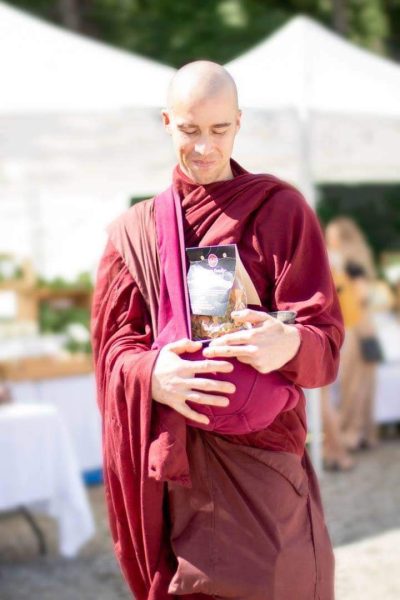
Bhante Ānanda is a monk (and hence a member of the Saṅgha) and is dedicating his life to the Dhamma. He is dependent on others for his modest livelihood. He does not need a lot, but as pointed out by the Buddha himself, food, shelter, clothing and medicines are the minimum requisites for life and to practice in peace. Monks do not (and cannot) handle money, and do not ask for anything.
All donations will go to the support of the Saṅgha’s livelihood and thereby, Bhante’s. Since the meager needs of monks are rapidly and easily met, what is given will go directly to offering the Dhamma to as many other people in the community as possible, in the shape of retreats, both online and physical, publication of Bhante’s Dhamma books for free distribution only and much more…
We are deeply and forever grateful to your magnanimous hearts.
Please visit our Dāna page for all donation options.